
The CEBECO Trap: Why an Uninsulated Roof Drives Up Your Monthly Power Bill
The CEBECO Trap: Why an Uninsulated Roof Drives Up Your Monthly Power Bill
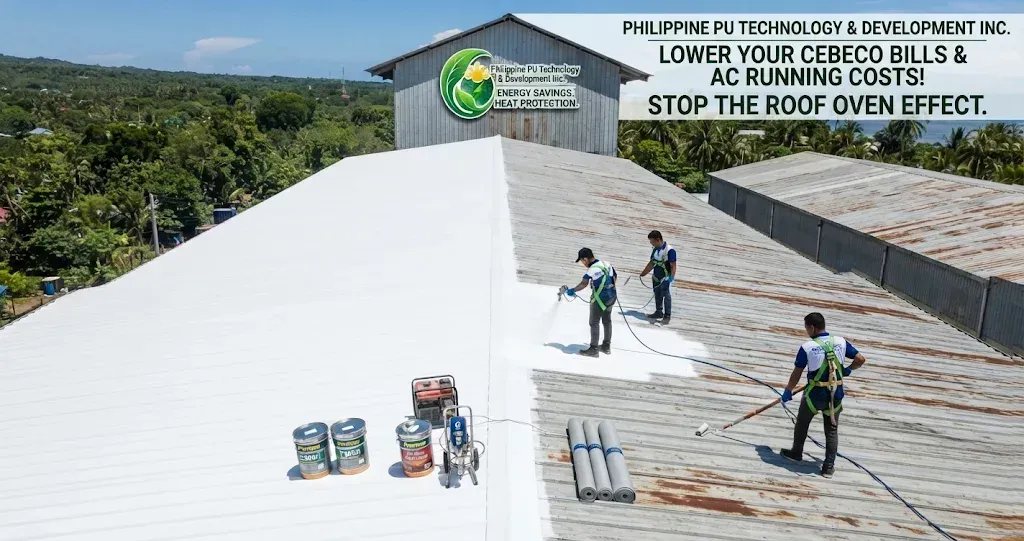
If you live and operate in Oslob or anywhere across the southern coast of Cebu, you know the daily reality: intense tropical heat beating down mercilessly, and the inevitable shock of opening your monthly electricity bill from CEBECO (Cebu Electric Cooperative).
Most property owners treat high power bills as an unavoidable cost of living in the tropics. You complain about the air conditioning unit running 24/7, the electric fans screaming on maximum speed, and the constant hum of the compressor struggling to keep up.
At Philippine PU Technology & Development Inc., we engineer solutions to European industrial standards. Based on our technical expertise in thermal and coating systems, here is the uncomfortable truth: Your uninsulated roof is the primary reason your CEBECO bill is skyrocketing every month.
Here is the CEBECO trap explained—and how you can break it.
Part 1: The "Oven Effect" on Your Roof
Under the direct midday tropical sun, a standard bare or aging galvanized iron (GI) roof sheet in Oslob reaches blistering temperatures of 65 °C to 75 °C.
- The Heat Radiator: Your entire roof essentially becomes a massive radiant heater, transferring that extreme thermal energy directly into the ceiling plenum (the space between your ceiling and roof).
- Heat Soak: Throughout the afternoon, this trapped heat soaks into your ceiling boards (Gypsum, Hardiflex) and radiates downwards into your bedrooms, living areas, or commercial spaces.
- The Inverter Struggle: Your air conditioner detects this immense heat load. To maintain a comfortable indoor temperature, the compressor must work at maximum capacity for hours on end, devouring kilowatt-hours and driving up your CEBECO meter.
The Result: A monthly power bill that constantly cuts deep into your operational budget or household savings.
Part 2: The Fan & Appliance Cascade
When your indoor space feels like a sauna, your physical and mechanical response multiplies power consumption across the board:
- Non-Stop Ventilation: Because the air is stagnant and scorching, electric fans run in every room around the clock, day and night.
- Overworked Appliances: Refrigerators, freezers, and electronics also struggle in higher ambient room temperatures, consuming more electricity to keep contents cool.
- The Auxiliary Load: The harder your cooling equipment works, the more power is drawn from the local grid—translating directly into higher fees from CEBECO.
The Engineering Solution: Break the Cycle at the Source
You cannot control the tropical sun, but you can control how your building interacts with it.
By applying an industrial-grade thermal insulation system before heat enters your building envelope, you solve the problem at the root:
- PU Sprayed Foam Insulation (Under-Deck): Creates a monolithic, airtight barrier that completely stops thermal transfer from entering the structure.
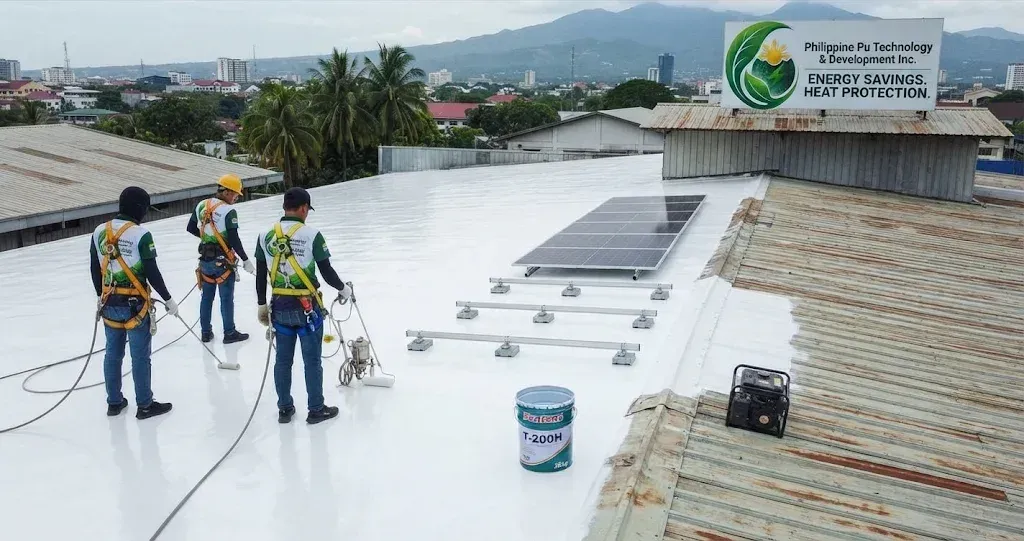
- Elastomeric Cool-Roof Coating (Pentens T-200H, Over-Deck): Reflects 86.9% of solar heat before it even touches your roof sheets, keeping the entire roof structure dramatically cooler.
The Financial Payback
When your roof is properly insulated and coated, the interior microclimate changes instantly:
- Your AC compressor reaches its target temperature quickly and cycles down to minimal idle capacity. (CEBECO Savings: 30% to 50% reduction in cooling energy costs).
- A Naturally Comfortable Home: You no longer need to blast fans and aircon simultaneously just to survive the afternoon heat.
- Asset Protection: You protect your building materials from thermal stress, rust, and premature aging.
Stop Overpaying CEBECO
Don't let an uninsulated roof hold your utility budget hostage month after month. Build it right and keep your property cool the smart way.
Explore our technical specifications and industrial thermal protection solutions at phputech.com. Ready for a professional evaluation? Send us your location in Oslob or Cebu, approximate roof area (sqm), and photos of your roof for a tailored technical proposal.