
Why Cheap Roof Paints Cost You More: The Hidden Trap of Acrylics vs. High-Grade Polyurethane
Why Cheap Roof Paints Cost You More: The Hidden Trap of Acrylics vs. High-Grade Polyurethane
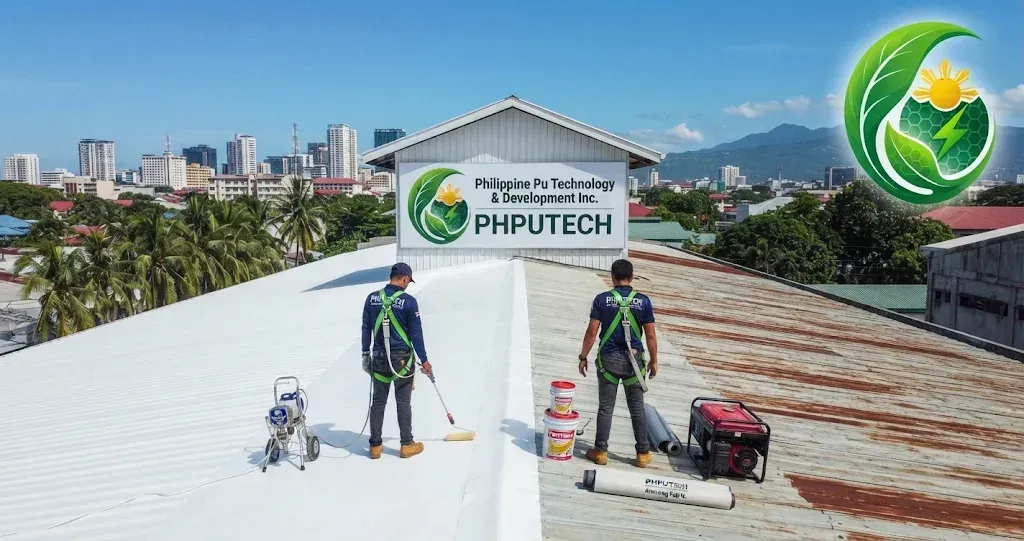
When a metal roof starts looking chalky or showing early signs of rust, many property owners look for a quick fix. They head to the hardware store, buy a few pails of ordinary acrylic roof paint, and hire local painters to roll it on.
It looks fresh and clean for a few months. But by the time the next heavy rainy season and intense tropical summer roll around, the paint begins to blister, peel, and crack—and the rust returns with a vengeance.
At Philippine PU Technology & Development Inc., we approach roof protection from an engineering perspective, grounded in European industrial standards. Here is why cheap, conventional acrylic paints fail in the tropics—and why switching to high-grade polyurethane is the only cost-effective long-term solution.
1. The Physics of Thermal Movement (Why Acrylics Crack)
In a tropical climate like the Philippines, metal roofs (GI sheets) undergo extreme daily temperature swings. Under direct midday sun, a bare or poorly coated metal roof can skyrocket to 65 °C to 75 °C, expanding significantly. At night, it cools down and contracts.
- Ordinary Acrylic Paint: Acrylic resins are rigid and have very low elasticity. When the metal expands and contracts, the acrylic coating cannot keep up. It quickly embrittles, cracks, and delaminates.
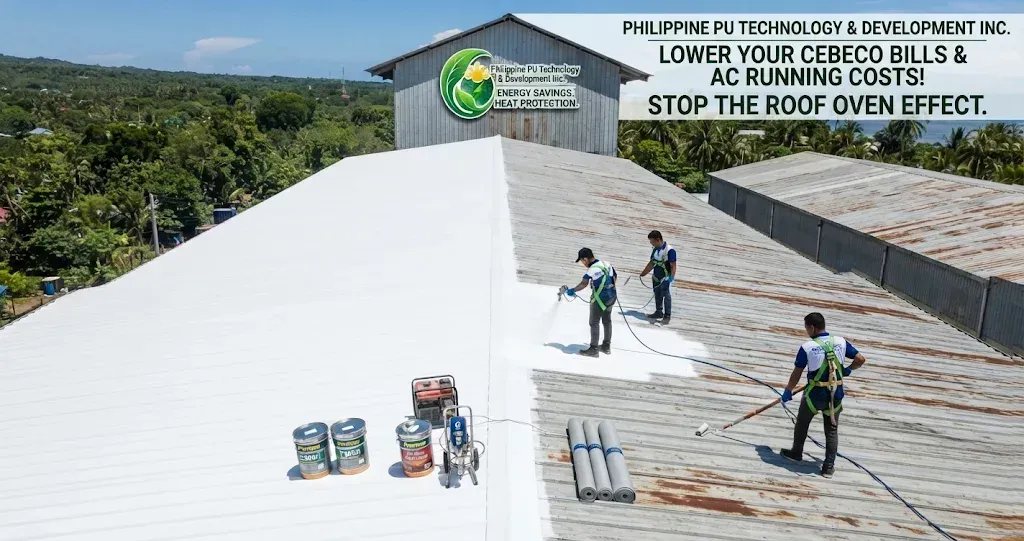
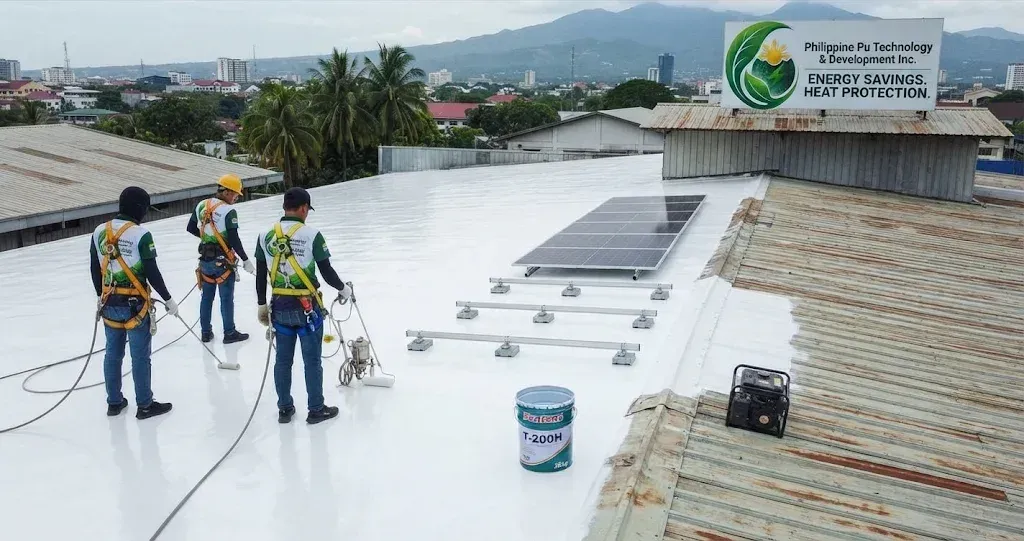
- Industrial Polyurethane (e.g., Pentens T-200H): High-grade elastomeric polyurethane features an exceptional elongation rate (>515% elongation). It stretches and recovers dynamically with the metal roof, bridging micro-cracks and maintaining a 100% seamless, watertight membrane year after year.
2. Moisture, Salt, and the "Buy Cheap, Buy Twice" Trap
Waterproofing is not about changing the color of your roof; it is about chemical and physical barrier protection.
- Low-cost water-based acrylic paints are porous to some degree. They allow trapped moisture and alkaline salts (especially in coastal areas like Oslob, Mactan, or Panglao) to attack the galvanized substrate underneath. Once moisture penetrates the paint film, rust spreads invisibly underneath the coating until large sheets of paint flake off.
- A true industrial system—combining a moisture-curing PU rust-converting primer with a multi-layer elastomeric PU membrane—chemically passivates the metal and locks out moisture permanently.
3. The True Cost Comparison: 1 Year vs. 10+ Years
- The Cheap Approach: Painting your roof every 1 to 2 years with low-cost acrylic paint means paying for labor, materials, and scaffolding over and over again. Within 5 years, you will have spent more money (and endured more headaches) than doing it right the first time—while your roof continues to thin out from rust.
- The Industrial PU Standard: Investing in a professional, seamless polyurethane system gives you 10+ years of reliable, maintenance-free protection (requiring only minor touch-ups thereafter) while slashing indoor temperatures through high solar reflectance (86.9%).
Build It Right the First Time
Stop wasting money on temporary cosmetic fixes that fail under tropical weather. Protect your building's structural integrity with engineering-grade materials designed to last.
Explore our technical specifications, industrial coating solutions, and professional services at phputech.com. Ready to protect your roof the right way? Send us your location, approximate roof area (sqm), and photos of your roof for a professional evaluation.