
Why Roof Preparation Comes First: Never Install Solar on an Unprotected Metal Roof
Why Roof Preparation Comes First: Never Install Solar on an Unprotected Metal Roof
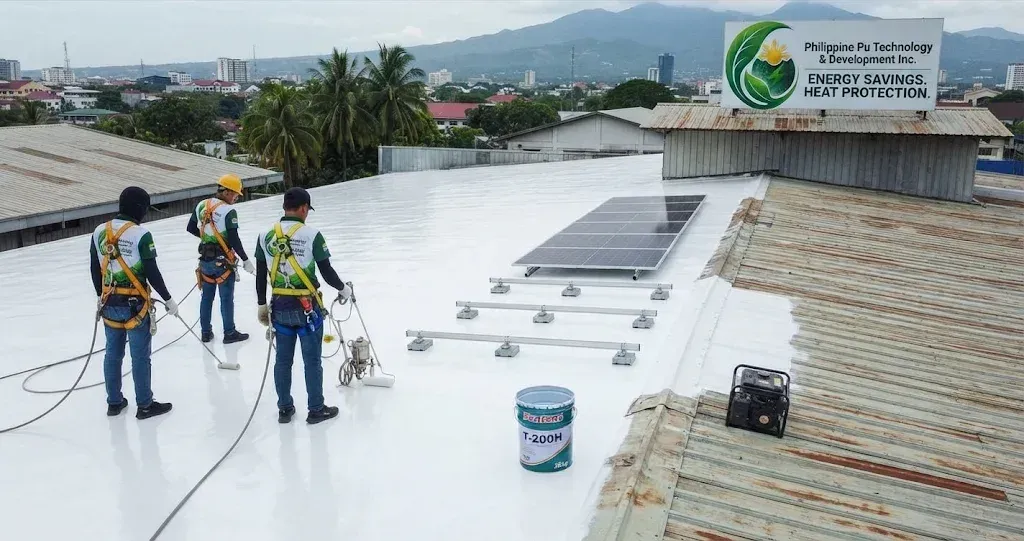
Investing in a photovoltaic (PV) solar system is one of the smartest long-term decisions for commercial and residential properties in Southeast Asia. Generating clean energy and slashing high electricity bills is a massive win.
However, we frequently see a costly mistake made across the region: installing expensive solar panels directly onto aging, slightly rusted, or unsealed metal roofs.
At Philippine PU Technology & Development Inc., we engineer industrial-grade solutions to European standards. Based on our technical expertise in thermal and coating systems, here is why thorough roof restoration and polyurethane waterproofing must always precede any solar installation.
1. The 25-Year Paradox: Solar Panels Outlast Unprotected Roofs
Standard monocrystalline solar panels are engineered to perform for 25 years or more. In contrast, a standard pre-painted galvanized iron (GI) roof in a tropical, coastal environment begins showing signs of rust, fastener degradation, and micro-leaks within 5 to 8 years.
- The Problem: Once your solar array is bolted down, the roof underneath becomes completely inaccessible.
- The Consequence: If your roof develops rust spots or leaks three years after putting up solar panels, you cannot simply paint or repair it. You face astronomical costs: disassembling the entire solar array, removing the inverter wiring, fixing the roof, and re-installing the solar system.
2. Eliminating Future Leak Risks at Every Penetration Point
Mounting a commercial or residential solar system requires drilling dozens—sometimes hundreds—of structural attachment points directly through the metal roof sheets into the purlins.
- Every single screw and bracket is a potential point of failure.
- Without a seamless, heavy-duty elastomeric membrane sealing the entire roof surface beforehand, driving tropical monsoons will eventually exploit these fastener penetrations, leading to ceiling damage, electrical short circuits, and structural wood/steel rot.
3. Double Protection: Cool-Roof Efficiency Boosts Solar Yield
When you combine our 1K Polyurethane Anti-Corrosion Primer with a high-performance elastomeric cool-roof coating (such as Pentens T-200H), you achieve two critical advantages before the solar panels even arrive:
- Thermal Heat Reflection: Our systems provide 86.9% solar reflectance, drastically dropping the surface temperature of the roof.
- Higher PV Efficiency: Photovoltaic panels lose electrical efficiency as operating temperatures rise. By keeping the roof and ambient microclimate cooler, your solar panels operate at optimal efficiency during peak tropical sun hours.
The Smart Engineering Sequence
Before bolting down heavy aluminum rails and solar modules, protect your long-term investment with a professional industrial-grade baseline:
- Thorough Surface Preparation: High-pressure industrial washing and mechanical removal of surface rust, salt deposits, and chalking paint.
- Chemical Passivation: Application of a moisture-curing polyurethane rust-converting barrier primer.
- Seamless Waterproofing Membrane: Dual cross-coat airless spray application of elastomeric polyurethane (>515% elongation), fully encapsulating all overlaps, ridge caps, and existing fasteners.
- Solar Installation: Mount your PV system onto a fully sealed, protected, and heat-reflective roof designed to last decades without maintenance headaches.
Protect Your Asset from Day One
Skipping roof preparation to save a little money upfront invariably leads to massive structural and financial headaches down the road. Build it right the first time.
Explore our technical specifications, industrial coatings, and hybrid solar integration solutions at phputech.com, or send us your location, roof size (sqm), and photos for a professional evaluation before your solar project begins.